What Is Your Car Actually Worth? How Used Car Valuation Really Works in Jharkhand
Why the Online Calculator and the Actual Offer Never Match
Almost every seller starts the same way: type the model, year and kilometres into a website, get a number, and anchor to it. Then the offers come in below it and the whole process feels like a negotiation in bad faith.
It usually is not. The calculator gave you a number for a 2019 Swift with 60,000 km. You own your 2019 Swift, with its particular service history, its particular paint, its particular set of previous owners and its particular tyres. The gap between those two things is where the entire disagreement lives.
Here is what actually sets the price.
The Eight Factors That Genuinely Move Price
1. Demand for that specific model, locally
Not national demand — Jharkhand demand. Cars with high ground clearance and cheap, everywhere-available parts hold value here in a way they do not in metros. A Swift, a WagonR or a Brezza has a deep local buyer pool. A premium model with a service centre only in another state has a thin one, and thin pools mean lower offers and longer waits, whatever the national listing sites say.
2. Service history — the single biggest swing factor you control
A complete, documented service record is worth real money, routinely tens of thousands of rupees on a mid-range car. It converts a stranger's guess about how the car was treated into evidence. If you have the folder, it is the most valuable non-metal part of the car. If you lost it, ask your service centre for a printout — most can produce one.
3. Condition, and specifically paint and structure
Original paint on all panels is a genuine premium. Resprays get found — a paint gauge takes five minutes — so a car described as fully original that is not will lose more in trust than it would have lost in disclosure. Structural repair is the largest single deduction there is.
4. Number of previous owners
First-owner cars command a clear premium. The jump from second to third owner costs noticeably more than the jump from first to second, because three owners in a short span makes buyers wonder what each of them found out.
5. Kilometres, in context
Kilometres matter less than owners think, and consistency matters more. A car showing 40,000 km in six years reads as under-used — seals dry out, batteries suffer, brakes seize. A well-serviced 90,000 km highway car is often the better vehicle. What genuinely destroys value is a reading that does not match the car's wear, because that reads as tampering.
6. Fuel type and, now, E20 compliance
This is new and it is moving. Since April 2026 all petrol sold in India is E20, and cars built from April 2023 were designed for it while older ones were not. Buyers have started asking. A post-April-2023 petrol build is now easier to sell than one from six months earlier. It is not a collapse in older car values, but it is a live question you should be ready to answer.
7. Paperwork that transfers cleanly
An uncleared hypothecation, a missing NOC, or a mismatch between the chassis number and the RC will stall a sale completely. Buyers discount heavily for paperwork risk because they cannot price it. Clear it before you list and you remove the discount.
8. Timing
Prices soften right after a major facelift of your model launches, and around new-model festive offers. They firm up ahead of the festive buying season. If you have flexibility of a month or two, it is worth a conversation.
The Four Things Owners Consistently Overestimate
- Accessories and modifications. The ₹60,000 music system, the alloys, the seat covers — these almost never return their cost, and aggressive modifications can reduce the buyer pool. Fit them because you want them, not as an investment.
- A recent expensive repair. Replacing a clutch or a battery last month restores the car to expected condition; it does not lift it above market. It prevents a deduction rather than creating a premium.
- Emotional condition. "It has been babied" is worth nothing without documentation. "Serviced on schedule at the same centre, here is the record" is worth a lot. Same car, completely different price.
- The asking prices on listing sites. Those are asks, not transactions. The number a car actually changed hands for is often well below the number it was advertised at for three months.
How to Get the Best Price for Your Car
In rough order of return on effort:
- Assemble the paperwork first. RC, insurance, service records, hypothecation clearance, PUC. This single step moves more money than anything else on this list and costs nothing.
- Get it professionally cleaned, inside and underneath. A few thousand rupees, reliably returned several times over. Buyers extrapolate from what they can see to what they cannot.
- Fix the small, visible, cheap things. A blown bulb, a torn wiper, a warning light. Each one silently invites a much larger deduction than the repair costs, because each one suggests deferred maintenance elsewhere.
- Do not fix the large things. A major repair just before selling rarely returns its cost. Disclose it and price it in instead.
- Get one honest valuation before you talk to anyone. Negotiating without knowing your number is how people either lose ₹50,000 or sit on an overpriced car for four months.
What We Do
Bring the car to any of our Ranchi showrooms and we will inspect it across 200+ checkpoints and give you a firm valuation — what we will actually pay, not an indicative range that moves when you arrive. The inspection is free and there is no obligation to sell to us.
If our number is not the best you can get, we will tell you that too. We have been buying and selling cars here since 1992, and we buy more cars from people who first came in for a valuation and went away to think about it than from anyone we pressured on the day.
If you would rather not sell outright, ask about exchanging it against something from our floor — the arithmetic often works out better than two separate transactions.
Find Out What Your Car Is Actually Worth
We have been buying and selling cars in Ranchi since 1992. Get a firm valuation from our purchase desk — no obligation to sell.
Related Articles
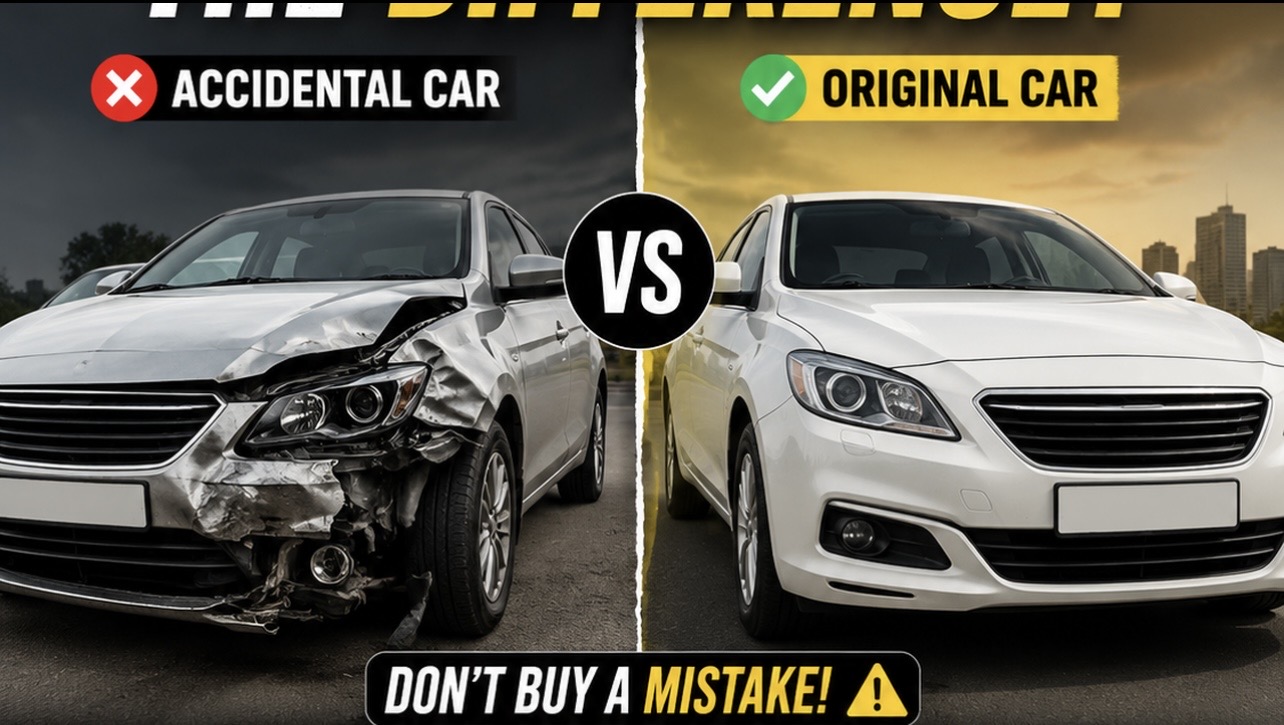
Accidental Car vs Original Car — How to Identify the Difference?
If you are planning to buy a second-hand car, there is one thing you should never ignore — the car’s accident history.
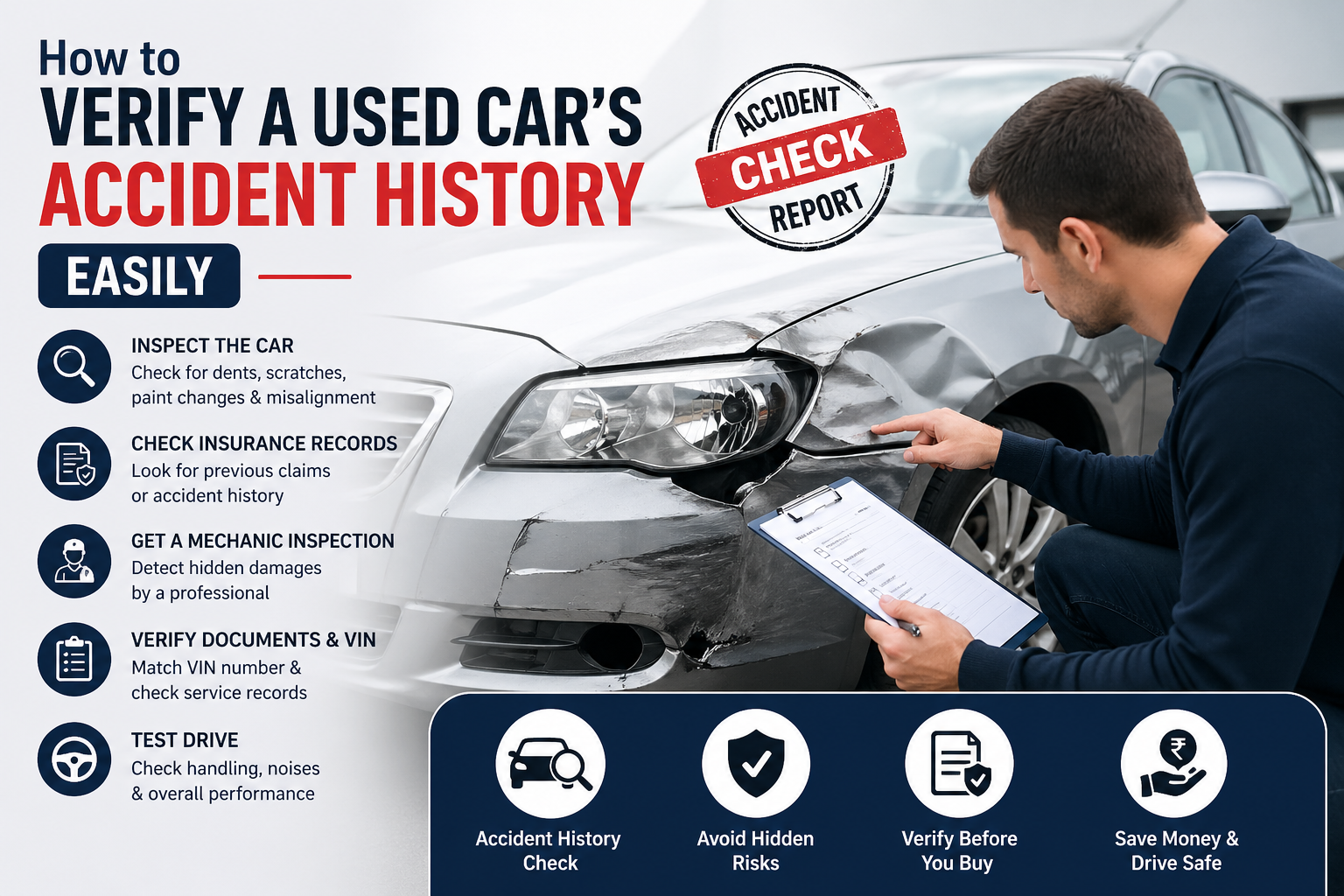
How to Verify a Used Car’s Accident History Easily
Buying a used car can save a lot of money, but it also comes with risks. One of the biggest risks is unknowingly buying a car that has been in a serious accident. Such cars may have hidden damage, poor safety, and lower resale value
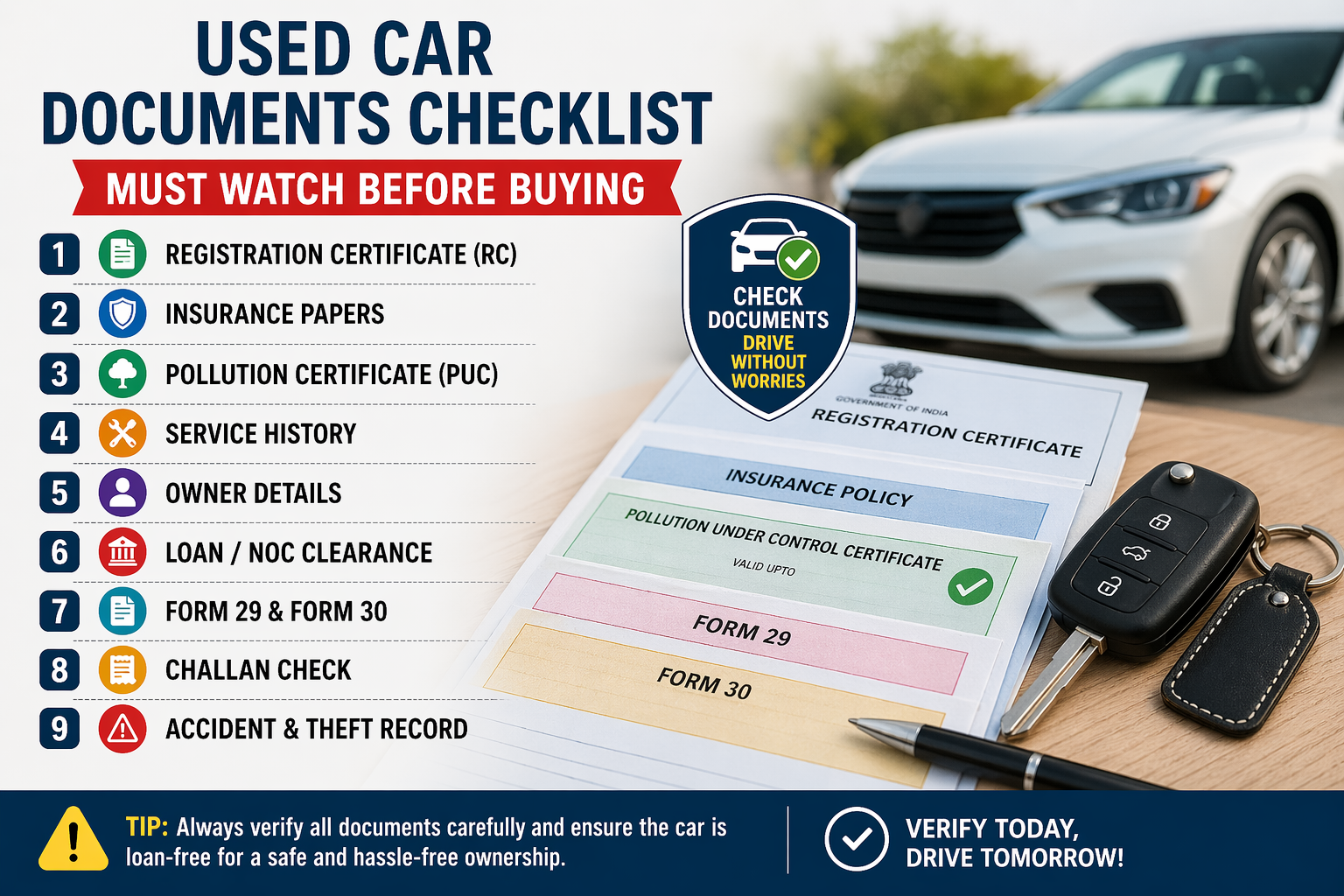
Used Car Documents Checklist (Must Watch Before Buying)
Buying a used car can be a smart decision… but only if your documents are 100% clear. One small mistake can lead to big legal or financial trouble.