Accidental Car vs Original Car — How to Identify the Difference?
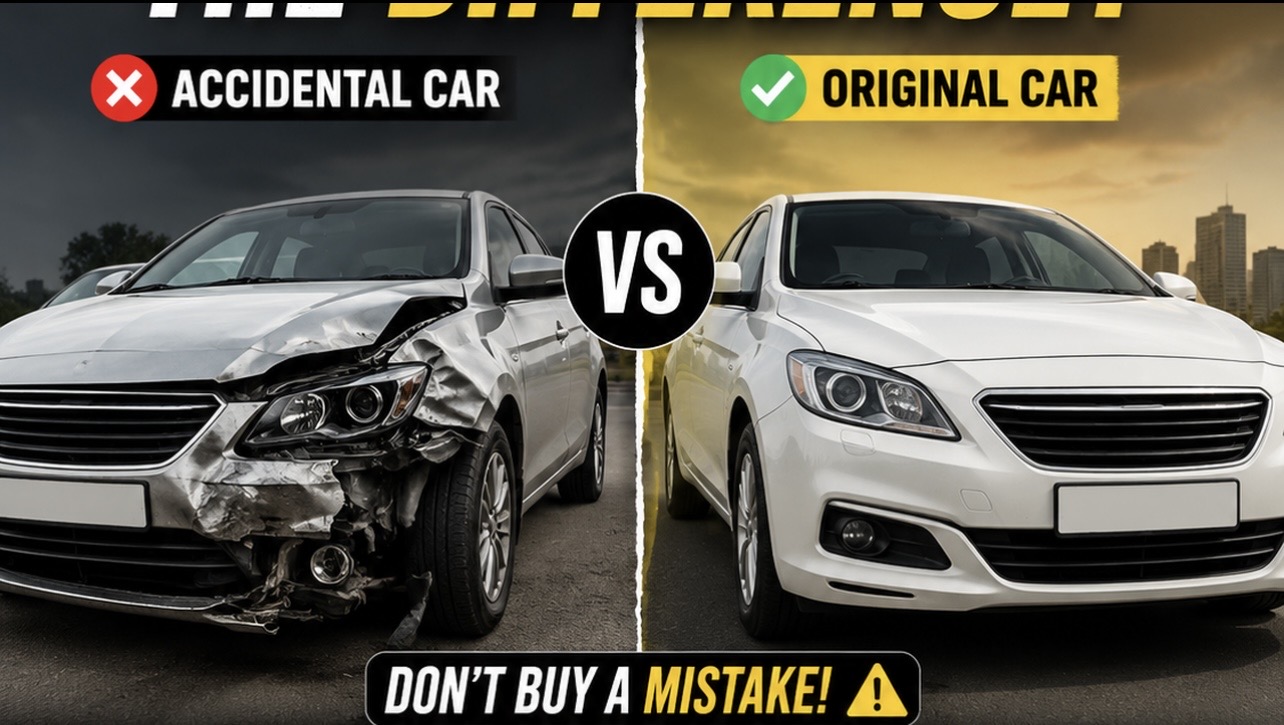
A car may look absolutely perfect from the outside, but it could have had a major accident in the past.
So, in today’s blog, let’s understand how you can identify an accidental car vs an original car.
1. Check the Panel Gaps
First, carefully look at the gaps between the bonnet, doors, fenders and boot.
In an original car, these gaps are usually uniform and properly aligned.
If you notice one side has a wider gap or the panel looks slightly misaligned, it could be a sign that the panel has been repaired or replaced.
2. Check the Paint Difference
Next, look carefully at the paint.
Stand a little away from the car and check the body panels under proper lighting.
If one panel looks slightly different in shade, texture or gloss compared to the surrounding panels, it may have been repainted.
You can also use a paint thickness gauge to check whether the paint is original or has additional layers.
3. Look for Welding Marks
This is one of the most important checks.
Open the bonnet, boot and doors and carefully inspect the inner body structure.
If you see unusual welding marks, fresh paint, uneven metal or signs of cutting and joining, it could indicate that the car has suffered a major accident.
4. Check the Headlights and Other Parts
Check the manufacturing date or markings on the headlights, taillights and other major components.
If one side has a significantly different manufacturing date from the other side, it doesn’t automatically mean the car was accidental — but it is definitely something you should investigate further.
5. Check the Chassis and Structural Parts
This is where things get serious.
If the car has suffered a major accident, the chassis or structural parts can sometimes be affected.
Look for bends, cracks, unusual welding or repairs around the chassis and major structural areas.
Never ignore these signs because structural damage can affect the car’s safety and driving behaviour.
6. Take a Test Drive
Don’t just judge a used car by its appearance.
Take it for a proper test drive.
Check whether the car pulls to one side, whether the steering feels straight, and whether you notice unusual vibrations or noises.
These can sometimes indicate alignment or suspension-related issues.
7. Get a Professional Inspection
And finally, if you are not an expert, don’t try to judge everything yourself.
Before buying a used car, get a professional inspection or PDI done.
A proper inspection can help identify hidden repairs, repainting, structural damage, mechanical issues and other problems that may not be visible to the naked eye.
Final Tip
Remember, a repainted panel doesn’t always mean the car is bad, and an accidental car isn’t necessarily an unusable car.
The important thing is to know what happened, how serious the accident was, and how professionally the car was repaired.
So, before buying any second-hand car, check the car’s history, inspect the body, take a test drive and get a professional inspection.
Get the Car Inspected Before You Pay
A used car hides its history well. Our inspection covers engine, structure, electricals and paperwork — and you get the report in writing.
Related Articles
What Is Your Car Actually Worth? How Used Car Valuation Really Works in Jharkhand
Online calculators give you a number with no car attached. Here is what genuinely moves a used car valuation in the Jharkhand market — the eight factors that set the price, the four that owners overestimate, and how to get the best price for your car without wasting three months.
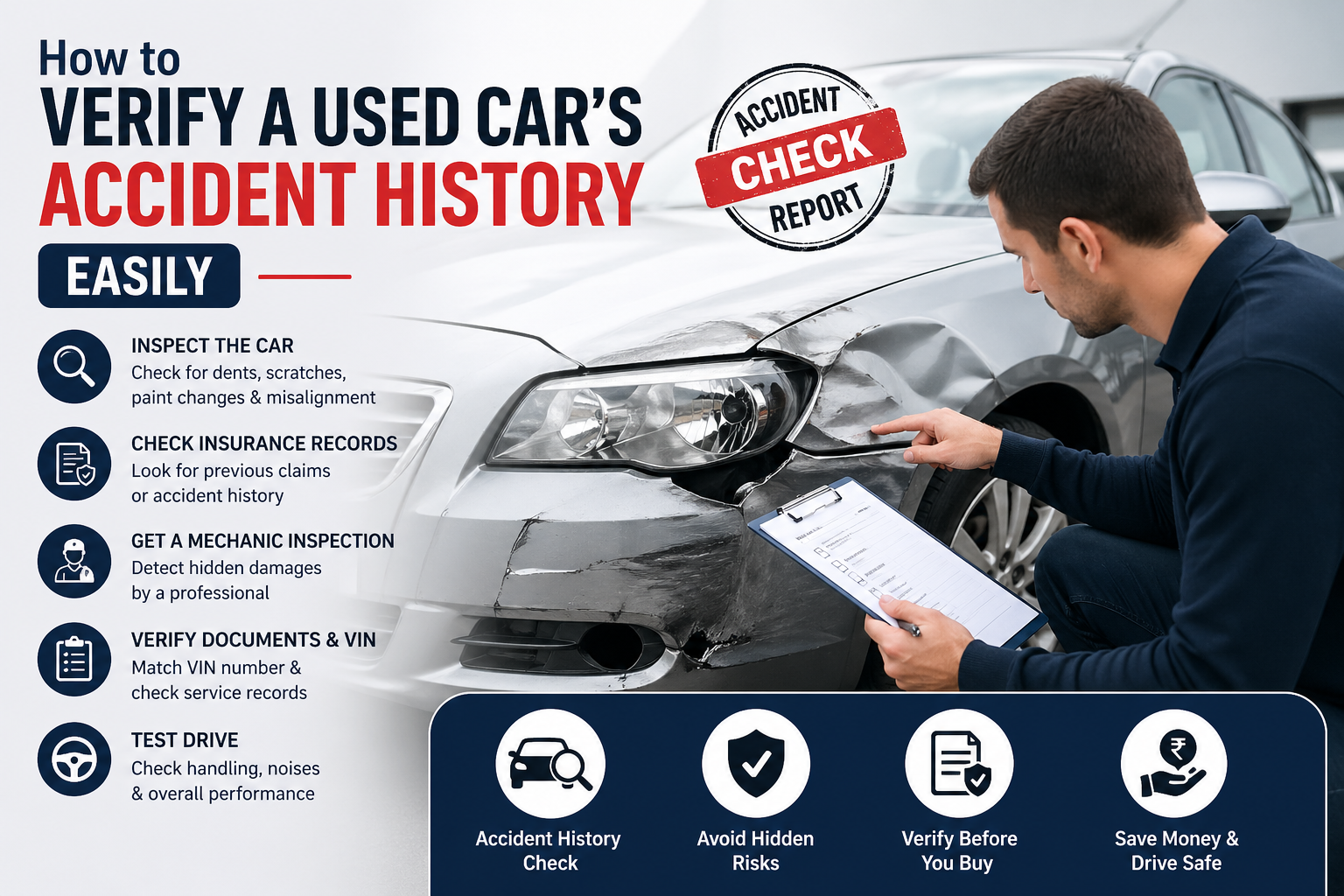
How to Verify a Used Car’s Accident History Easily
Buying a used car can save a lot of money, but it also comes with risks. One of the biggest risks is unknowingly buying a car that has been in a serious accident. Such cars may have hidden damage, poor safety, and lower resale value
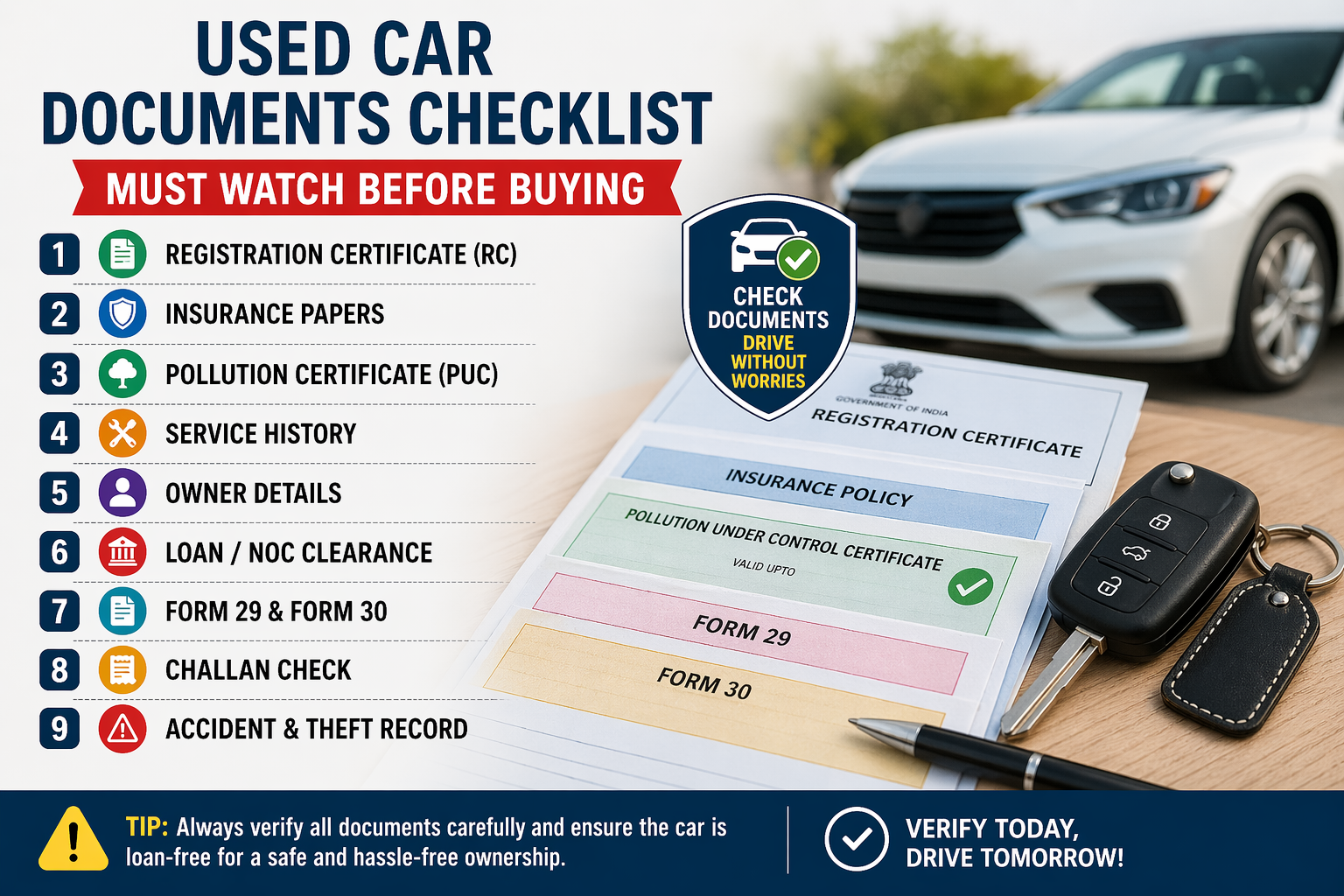
Used Car Documents Checklist (Must Watch Before Buying)
Buying a used car can be a smart decision… but only if your documents are 100% clear. One small mistake can lead to big legal or financial trouble.