Understanding Your Car's Warning Lights: A Guide for Indian Drivers
Understanding Your Car's Warning Lights: A Guide for Indian Drivers
As an Indian driver, understanding your car's warning lights is crucial for ensuring both safety and reliability on the road. The dashboard indicators are designed to alert you to various issues, and knowing what they mean can prevent costly repairs and unsafe driving situations.
Common Warning Lights
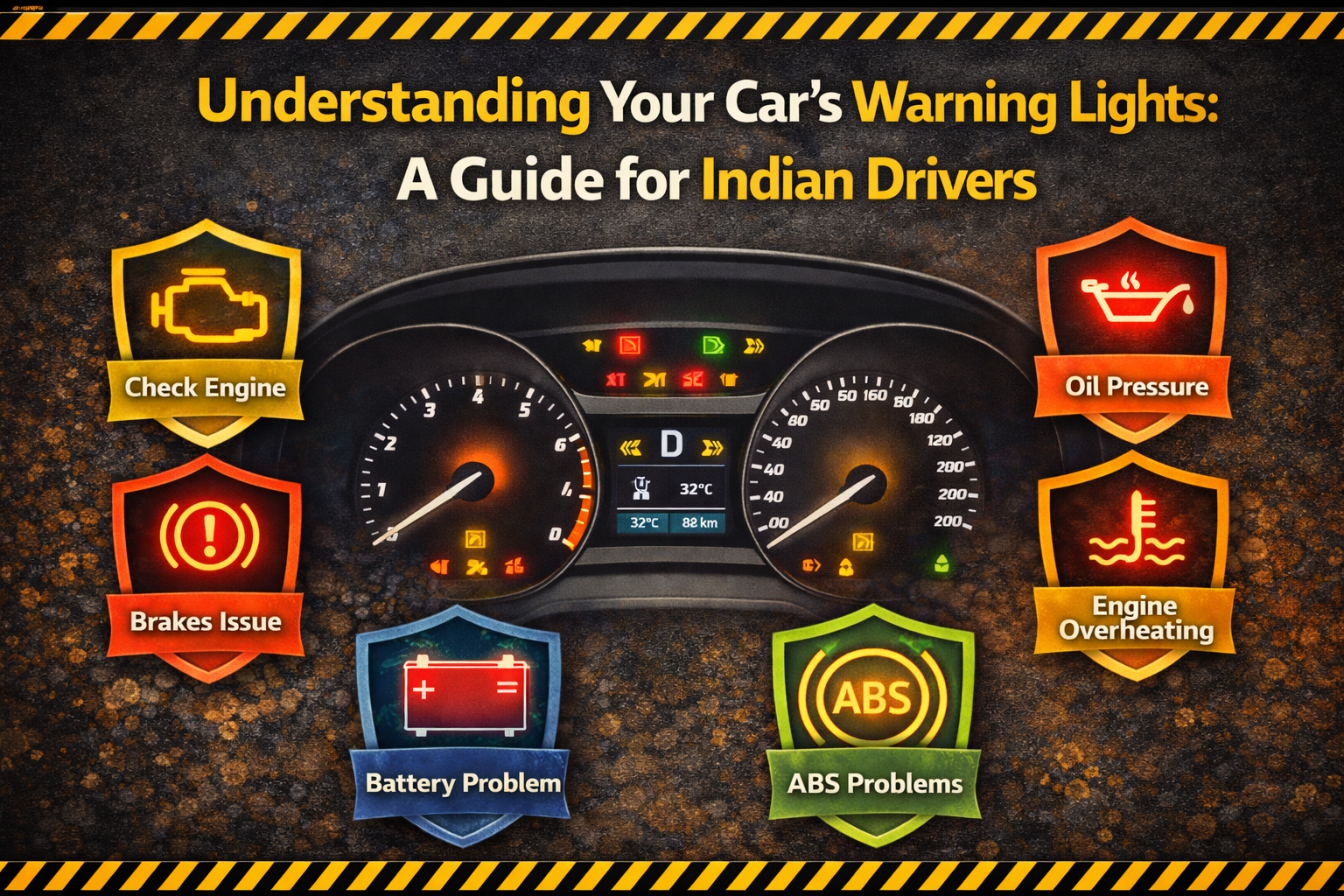
- Check Engine Light: This light indicates a problem with the engine or related systems. It could signify anything from a loose fuel cap to a serious engine issue. Ignoring it might lead to higher repair costs down the line.
- Oil Pressure Warning: A red oil can symbol suggests low oil pressure, which could cause severe engine damage if not addressed. Ensure you check your oil levels and consider an oil change if it's low.
- Battery Warning: This icon, resembling a battery, warns you about charging system issues. If you see this light while driving, consider pulling over and getting your battery tested to avoid being stranded.
- Brake Warning Light: This light can mean several things, including low brake fluid or a malfunction in the brake system. Given the varied road conditions in India, ensure your brakes are functioning well.
- ABS Warning Light: If the ABS (Anti-lock Braking System) light illuminates, it indicates a problem with the ABS, which may affect your vehicle's stopping ability, especially on slippery surfaces.
- Tire Pressure Monitoring System (TPMS): The TPMS light alerts you to low tire pressure. Considering the challenging road conditions in India, maintaining proper tire pressure is essential for safety and fuel efficiency.
Importance of Addressing Warning Lights
Neglecting warning lights can lead to severe consequences, including breakdowns and accidents. For instance, ignoring the check engine light could escalate a minor issue into an expensive one, potentially costing thousands of Rs. in repairs.
Steps to Take When a Warning Light Appears
- Check Your Owners Manual: This manual includes detailed descriptions of all the warning lights specific to your vehicle model.
- Pull Over Safely: If you're driving and a warning light appears, safely pull over to assess the situation.
- Diagnose the Problem: Use an OBD-II scanner if available, or consult a mechanic to diagnose the issue.
- Take Immediate Action: If it's a critical issue (like oil pressure), seek professional help immediately to prevent further damage.
Conclusion
Understanding and responding to your vehicle's warning lights is crucial for maintaining your car and ensuring road safety. As Indian drivers often face challenging conditions, being proactive in vehicle care can lead to safer journeys. Always be attentive to your dashboard indicators, and don't hesitate to seek help when necessary.
Book Your Car Into Our Workshop
Our workshop services every make we sell — and plenty we don't. Transparent estimates, and we tell you what can wait.
Related Articles
Free Used Car Inspection in Ranchi: The 200+ Checks We Run Before We Will Put Our Name on a Car
We inspect every used car across 200+ checkpoints before it goes on our floor, and we will run the same inspection free on a car you are buying from someone else. Here is what we check, the five things that make us reject a car outright, and how to use the report.
What Actually Happens During a Poddar Motors PDI (And Why 20 Minutes at the Dealership Is Not Enough)
A pre-delivery inspection is your last chance to reject a car before it becomes your problem. Here is exactly what our technicians check across 150, 250 and 350+ checkpoint inspections — the paint gauge, the OBD scan, the engine sound analysis — and what we have caught doing it.
Used Car Insurance Transfer in Jharkhand: The 14-Day Rule and Every Step Explained
Most used car buyers focus on the RC transfer and forget about insurance. That mistake can cost lakhs in a denied claim. Here's exactly how to transfer your used car insurance, what NCB you actually get, and the add-ons worth paying for.