Master Your Budget: Essential Guide to Buying a Used Car in India
Master Your Budget: Essential Guide to Buying a Used Car in India
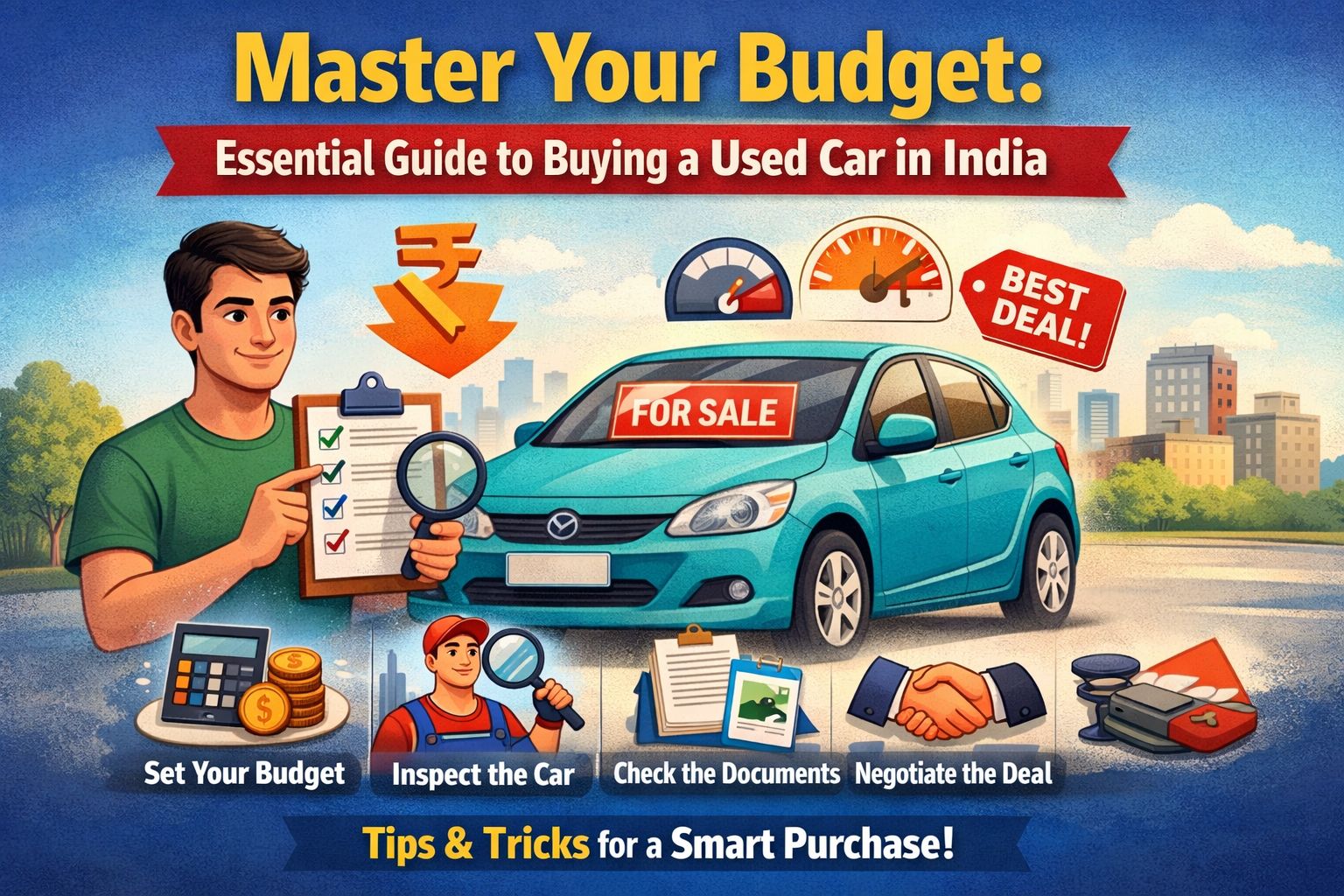
Buying a used car can be an exciting yet daunting task, especially if you’re trying to stick to a budget. To help you navigate this process, here's a complete guide on how to calculate your budget before diving into the used car market in India.
1. Determine Your Overall Budget
Start by deciding how much you're willing to spend. This amount should include:
- Purchase Price: The price of the used car itself.
- Registration Fees: Costs for registering the car in your name, which can vary by state (usually around Rs. 1,000 to Rs. 5,000).
- Insurance: Get a quote for insurance premiums; comprehensive coverage is advisable, especially for a used car.
- Servicing Costs: Anticipate additional expenses for maintenance and servicing in the first year.
- Fuel Costs: Consider the expected mileage (km per litre) and average fuel price to estimate your spending.
2. Calculate Monthly Installments
If you're opting for a loan, understanding your EMI (Equated Monthly Installment) is crucial:
- Loan Amount: Decide the amount you would like to loan.
- Interest Rate: Research different lenders for competitive interest rates.
- Loan Tenure: Determine how long you wish to repay (usually 3 to 5 years).
Use an EMI calculator to find out your monthly repayment. Ensure this amount fits comfortably within your monthly budget.
3. Assess Additional Costs of Ownership
Owning a car comes with various ongoing expenses, so consider:
- Fuel Efficiency: Consider the fuel economy of the car (km/litre) and calculate monthly fuel costs based on usage.
- Maintenance and Repairs: Factor in regular servicing and unexpected repairs, typically estimated at around 1% of the car's value annually.
- Road Tax: This varies by vehicle and location, so check local regulations.
- Tolls and Parking: Anticipate these costs based on your driving routes.
4. Create a Contingency Fund
It’s wise to set aside about 10-15% of your budget for unforeseen expenses. This adds a layer of security, as unexpected repairs or emergencies can arise.
5. Research to Narrow Down Your Choice
Now that you have a clearer budget, start researching used cars within your price range. Consider factors like:
- Brand Reliability: Some brands and models are known for better longevity and lower maintenance costs.
- Resale Value: Choose a car that retains value better; this can benefit you if you decide to sell later.
- Reviews and Ratings: Check reviews from other users regarding performance, comfort, and any common issues.
In conclusion, buying a used car in India can be a worthy investment if you plan and budget wisely. By understanding all aspects of the budget, you can make informed decisions and enjoy your new vehicle without financial strain.
Work Out Your EMI Before You Commit
We arrange used-car finance with partner banks and NBFCs. Know your eligibility and monthly outgo before you choose the car.
Related Articles

Free Used Car Inspection in Ranchi: The 200+ Checks We Run Before We Will Put Our Name on a Car
We inspect every used car across 200+ checkpoints before it goes on our floor, and we will run the same inspection free on a car you are buying from someone else. Here is what we check, the five things that make us reject a car outright, and how to use the report.
What Actually Happens During a Poddar Motors PDI (And Why 20 Minutes at the Dealership Is Not Enough)
A pre-delivery inspection is your last chance to reject a car before it becomes your problem. Here is exactly what our technicians check across 150, 250 and 350+ checkpoint inspections — the paint gauge, the OBD scan, the engine sound analysis — and what we have caught doing it.

Used Car Insurance Transfer in Jharkhand: The 14-Day Rule and Every Step Explained
Most used car buyers focus on the RC transfer and forget about insurance. That mistake can cost lakhs in a denied claim. Here's exactly how to transfer your used car insurance, what NCB you actually get, and the add-ons worth paying for.