Essential Tips to Avoid Common Pitfalls When Buying a Used Car in India
Essential Tips to Avoid Common Pitfalls When Buying a Used Car in India
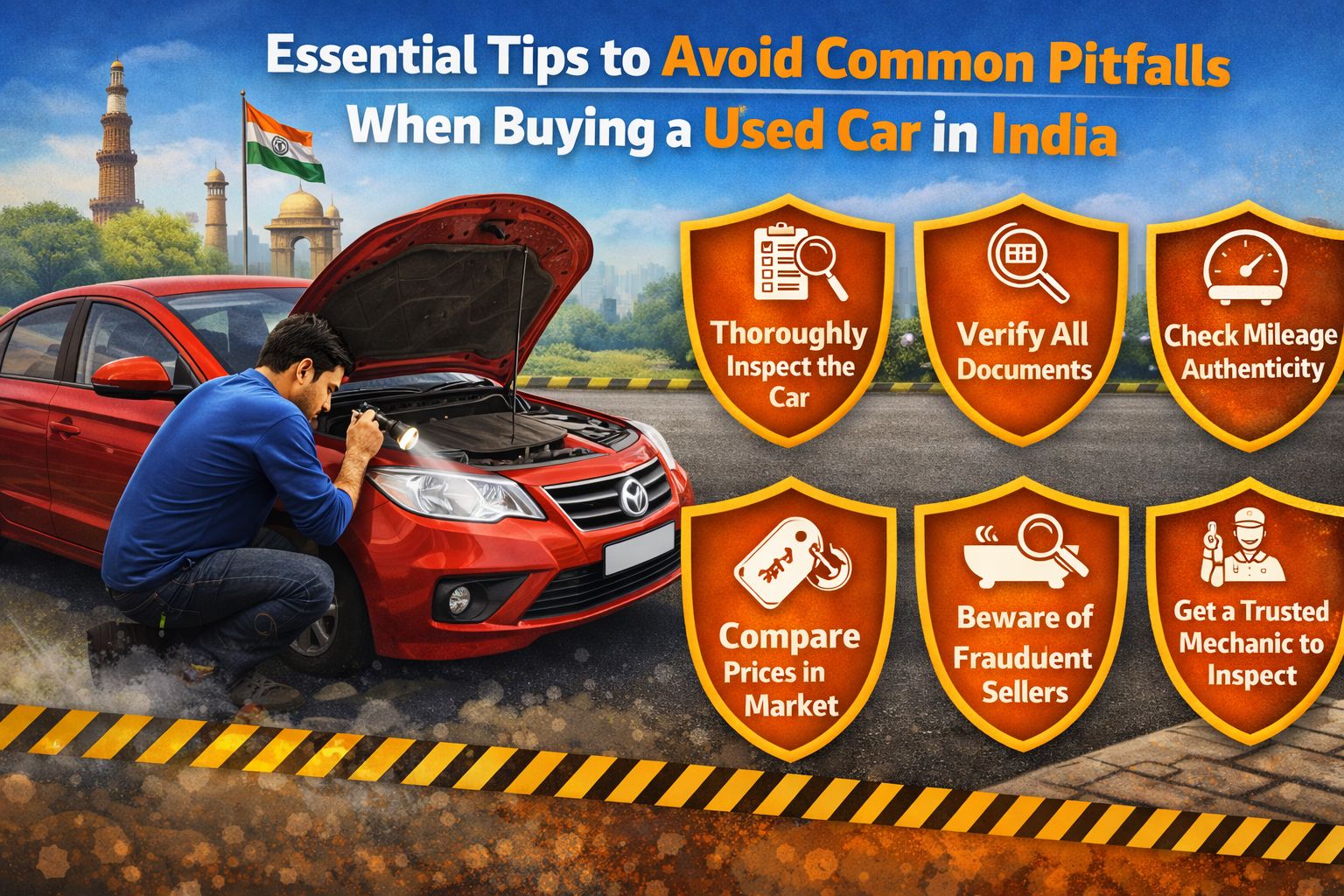
Buying a used car in India can be a daunting task, given the wide variety of options and potential pitfalls. To ensure you make a wise investment, here are some essential tips to avoid common mistakes.
1. Research Beforehand
Understanding market prices and the specific model you’re interested in is crucial. Check online platforms and local dealerships to gauge the average price.
2. Verify the Documents
Before making any payment, ensure that all documents such as the Registration Certificate (RC), insurance papers, and pollution under control (PUC) certificate are in order. Verify the vehicle's history through the Vehicle Identification Number (VIN).
3. Check the Mileage
Make sure to inspect the odometer. A car with unusually low mileage might indicate tampering. Generally, a good used car should have an average mileage of around 15,000 to 20,000 kms per year.
4. Inspect the Vehicle Thoroughly
- Exterior: Look for dents, scratches, and rust that could indicate poor maintenance.
- Interior: Check the upholstery, steering, and dashboard for signs of wear and tear.
- Engine: Examine under the hood for any leaks or irregularities and listen for unusual noises.
5. Take a Test Drive
This is one of the most important steps. Make sure to drive the car in various conditions – on highways and rough roads – to test its performance and handling.
6. Get a Mechanic’s Opinion
If you're not knowledgeable about cars, it’s wise to bring along a trusted mechanic. They can provide valuable insights into any hidden issues that might not be visible to an untrained eye.
7. Be Cautious of Deals That Seem Too Good to Be True
If an offer seems significantly lower than the market price, be suspicious. It could be a sign of hidden problems or even a fraudulent deal.
8. Understand the Negotiation Process
Don't accept the first price offered. Negotiate based on your research. Be prepared to walk away if the deal does not meet your expectations.
9. Have a Budget in Mind
Set a clear budget that includes additional costs such as transfer fees, insurance, and potential repairs. Stick to your budget to avoid overspending.
10. Check for any Existing Loans or Mortgages
Ensure that the vehicle has no outstanding loans or financial ties. A vehicle with a loan cannot be transferred until the loan is settled.
Conclusion
Buying a used car can be a rewarding experience if you take the time to do your homework. By following these tips, you can avoid common pitfalls and make a wise decision that fits your needs and budget.
Get the Car Inspected Before You Pay
A used car hides its history well. Our inspection covers engine, structure, electricals and paperwork — and you get the report in writing.
Related Articles
Free Used Car Inspection in Ranchi: The 200+ Checks We Run Before We Will Put Our Name on a Car
We inspect every used car across 200+ checkpoints before it goes on our floor, and we will run the same inspection free on a car you are buying from someone else. Here is what we check, the five things that make us reject a car outright, and how to use the report.
What Actually Happens During a Poddar Motors PDI (And Why 20 Minutes at the Dealership Is Not Enough)
A pre-delivery inspection is your last chance to reject a car before it becomes your problem. Here is exactly what our technicians check across 150, 250 and 350+ checkpoint inspections — the paint gauge, the OBD scan, the engine sound analysis — and what we have caught doing it.

Used Car Insurance Transfer in Jharkhand: The 14-Day Rule and Every Step Explained
Most used car buyers focus on the RC transfer and forget about insurance. That mistake can cost lakhs in a denied claim. Here's exactly how to transfer your used car insurance, what NCB you actually get, and the add-ons worth paying for.