Your Ultimate Guide to Winter Car Preparation: Essential Checks for Safety and Longevity
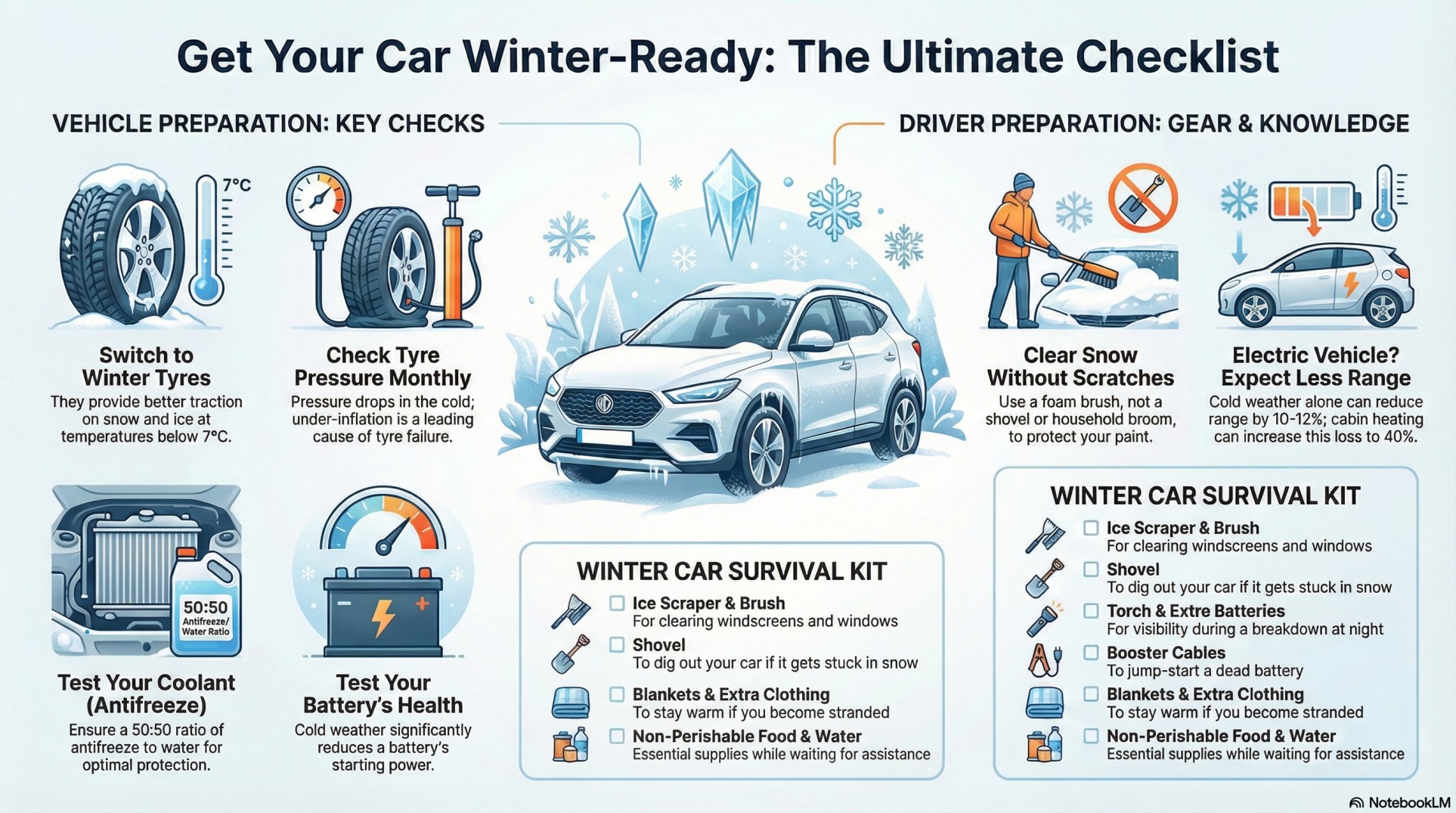
As cold temperatures, snow, ice, and road salt begin to take their toll, winter can be a tough season for your vehicle. Taking proactive steps to prepare your car—from engine fluids to emergency kits—is crucial for a safer, less damaging experience.
Here is a comprehensive checklist drawing on expert advice to ensure your vehicle is ready to tackle the elements.
1. Protecting Your Engine: The Coolant Conundrum
Antifreeze is a substance used in vehicles to prevent the engine from freezing in cold temperatures. It is also known as coolant. Coolant plays a crucial role in engine protection, preventing extensive damage during winter and overheating in summer. Coolant refers to the entire system that includes both antifreeze and other additives. The benefits of coolant include protection against freezing in winter, cooling the engine during summer, anti-corrosive properties, preventing metal destruction, and preventing deposits that reduce cooling system efficiency.
Coolant Maintenance Tips
- Mind the Colour: The colour of a car's coolant is no longer a reliable indicator of its chemical composition or properties. Historically, blue or green were associated with Inorganic Additive Technology (IAT) and orange was linked to Organic Acid Technology (OAT). However, modern coolants have made this distinction obsolete.
- Consult the Manual: It is essential to consult the car's manual when refilling or topping up the cooling system to ensure the correct type of coolant is used. Using the wrong type can cause damage to the system.
- Dilution Matters: Antifreeze is typically a concentrated formula that needs to be mixed with water, generally at a 50-50 ratio. If you are in a climate that experiences extreme low temperatures, consider altering the ratio to 40% water to 60% antifreeze, or even up to 70% coolant for added protection in colder areas.
- Use the Right Water: Using plain water for cooling is not recommended because of the risk of boiling and freezing expansion, which can crack engine components. When diluting, use distilled water, as tap water's chlorine and minerals can cause scale buildup and increase corrosion.
- Change Interval: While coolant can theoretically last indefinitely, in practice, it should be changed regularly for optimal performance and protection. Many manufacturers specify a change interval of either 5 years or 150,000 miles. Failing to change the coolant regularly (recommended every 2–5 years) can cause irremediable engine damage during winter.
2. Tire Safety and Traction
Tires are the most active safety equipment of your car, mediating steering, braking, and accelerating forces. The role of tires in safety is especially pronounced under demanding conditions like snow or ice.
Checking Cold Inflation Pressure
Proper inflation is one of the most important aspects of tire maintenance. You should check and adjust tire pressure at least once a month and before every long trip (over 250 miles or highway trips).
- Temperature Effects: For every 10° Fahrenheit change in air temperature, your tire's inflation pressure will change by about 1 psi (up with higher temperatures and down with lower).
- Underinflation Risks: An underinflated tire provides insufficient air pressure, leading to faster wear on the shoulder areas of the tread. If tires are underinflated by just 6 psi, fuel economy can be reduced by up to 5%, and tread life can be reduced by as much as 25%.
- Checking Technique: The vehicle's recommended tire pressure is its cold tire inflation pressure. This should be checked in the morning before driving more than a few miles, or before rising ambient temperatures or the sun’s radiant heat affect it. Inflation pressure cannot be accurately estimated through visual inspection.
Winter Tyres (Snow Tires)
Snow tires are designed for use on snow and ice and are optimized to drive at temperatures below 7 °C (45 °F).
- Tread Design: Snow tires have a tread design featuring larger gaps than conventional tires, which increases traction on snow and ice. They typically feature an open, deep tread with a high void ratio, and additional siping (thin slits in the rubber) to improve traction on wet or icy surfaces.
- Standards: Tires that have passed specific winter traction performance tests are entitled to display a 3PMSF (Three-Peak Mountain Snow Flake) symbol, which indicates 10% better acceleration on snow, or an IMP (Icy Mountain Peak) symbol, which indicates 18% better deceleration on ice.
- Studs: Studded tires, which use metal or ceramic studs protruding from the tire, increase traction on hard-packed snow or ice. However, studs abrade dry pavement, causing dust and wear, and their use is prohibited or restricted seasonally in many jurisdictions.
3. Special Considerations for EVs and Snow Removal
Electric Vehicles (EVs) in Extreme Temperatures
Electric vehicle batteries are affected by temperature extremes.
- Cold Weather: Cold weather temporarily reduces EV battery range by slowing chemical and physical reactions (conductivity and diffusivity). The use of in-vehicle climate control is the primary culprit, which can amplify range loss to 40%. Cold weather can also increase charging times by almost threefold. Charging when the battery is below freezing should be avoided, as it can cause lithium plating—a metallic buildup that permanently reduces capacity.
- Hot Weather: High temperatures lead to faster degradation because all chemical reactions happen faster, including unwanted reactions that make batteries degrade. High heat affects the Solid Electrolyte Interphase (SEI) layer, which can trigger reactions that use up too much active lithium.
Safe Snow and Ice Clearing
To remove snow and ice without damaging your car's paint, use the correct tools.
- Avoid Harsh Tools: Do not use shovels, household brooms, or nylon-bristled brushes, as these tools will damage your paint.
- Use the Right Gear: Use a good foam brush with a nonabrasive, freeze-resistant polyethylene head and a recessed hard-plastic scraper. For frosted-over windows, a brass-blade scraper can be used, as the car's glass is hard enough to withstand the scraping unscathed.
- Technique: Use the foam brush to pull, not push, the snow off your car. Resist the urge to remove every last bit of snow; instead, let your car warm up so the heat from your defroster and engine can handle the nooks and crannies.
4. Battling the Salt Menace (Corrosion Control)
Road salt and brine are highly corrosive and can cause vehicles to rust out.
- Frequent Washing: The most common strategy to slow salt damage is to wash the underbody and wheel wells as often as possible on dry days—ideally weekly, or even every three days if possible.
- Flush the Frame: For vehicles with a body-on-frame construction (e.g., SUVs and trucks), it is vital to keep the frames washed out. Accumulation of salt and debris inside the frame rails can cause them to rot from the inside out; use a low or high-pressure hose to flush them out via the access and drain holes.
- Rust Prevention Coatings: Applying anti-corrosion formulas such as Fluid Film, Krown, or Rust Check to the undercarriage every year before winter is highly recommended to extend the life of the car.
- Repairing Existing Rust: If touching up existing corrosion, products like POR-15 can be used, but you must sand down the area before applying the paint, despite the product name.
5. Car Winter Survival Kit Checklist
Being prepared for a roadside emergency is essential during the colder months. Keep a comprehensive kit in your vehicle.
Essentials to Include:
CategoryItemsVisibility & SignalingFlashlight & Extra Batteries, Flares/Triangles & other Bright Objects, Extra de-icing wiper fluidWarmth & ClothingBlankets/Sleeping Bag, Extra Clothing (Hats, Mittens, Parkas, Boots), Winter hat and gloves, Snow boots or warm socksSelf-Recovery & RepairsSnow Shovel, Ice Scraper with Brush, Booster Cables, Sand/Kitty Litter (Used for Traction), Basic tool kitSustenance & CommunicationBottled Water (in freeze-safe containers), Non-Perishable Food (Granola Bars, Dried nuts, etc.), Cell Phone & Charger, Power bankMedicalFirst Aid Kit
Get the Car Inspected Before You Pay
A used car hides its history well. Our inspection covers engine, structure, electricals and paperwork — and you get the report in writing.
Related Articles

Free Used Car Inspection in Ranchi: The 200+ Checks We Run Before We Will Put Our Name on a Car
We inspect every used car across 200+ checkpoints before it goes on our floor, and we will run the same inspection free on a car you are buying from someone else. Here is what we check, the five things that make us reject a car outright, and how to use the report.

What Actually Happens During a Poddar Motors PDI (And Why 20 Minutes at the Dealership Is Not Enough)
A pre-delivery inspection is your last chance to reject a car before it becomes your problem. Here is exactly what our technicians check across 150, 250 and 350+ checkpoint inspections — the paint gauge, the OBD scan, the engine sound analysis — and what we have caught doing it.

Used Car Insurance Transfer in Jharkhand: The 14-Day Rule and Every Step Explained
Most used car buyers focus on the RC transfer and forget about insurance. That mistake can cost lakhs in a denied claim. Here's exactly how to transfer your used car insurance, what NCB you actually get, and the add-ons worth paying for.