Navigating Car Loan Eligibility in India: Key Factors to Consider
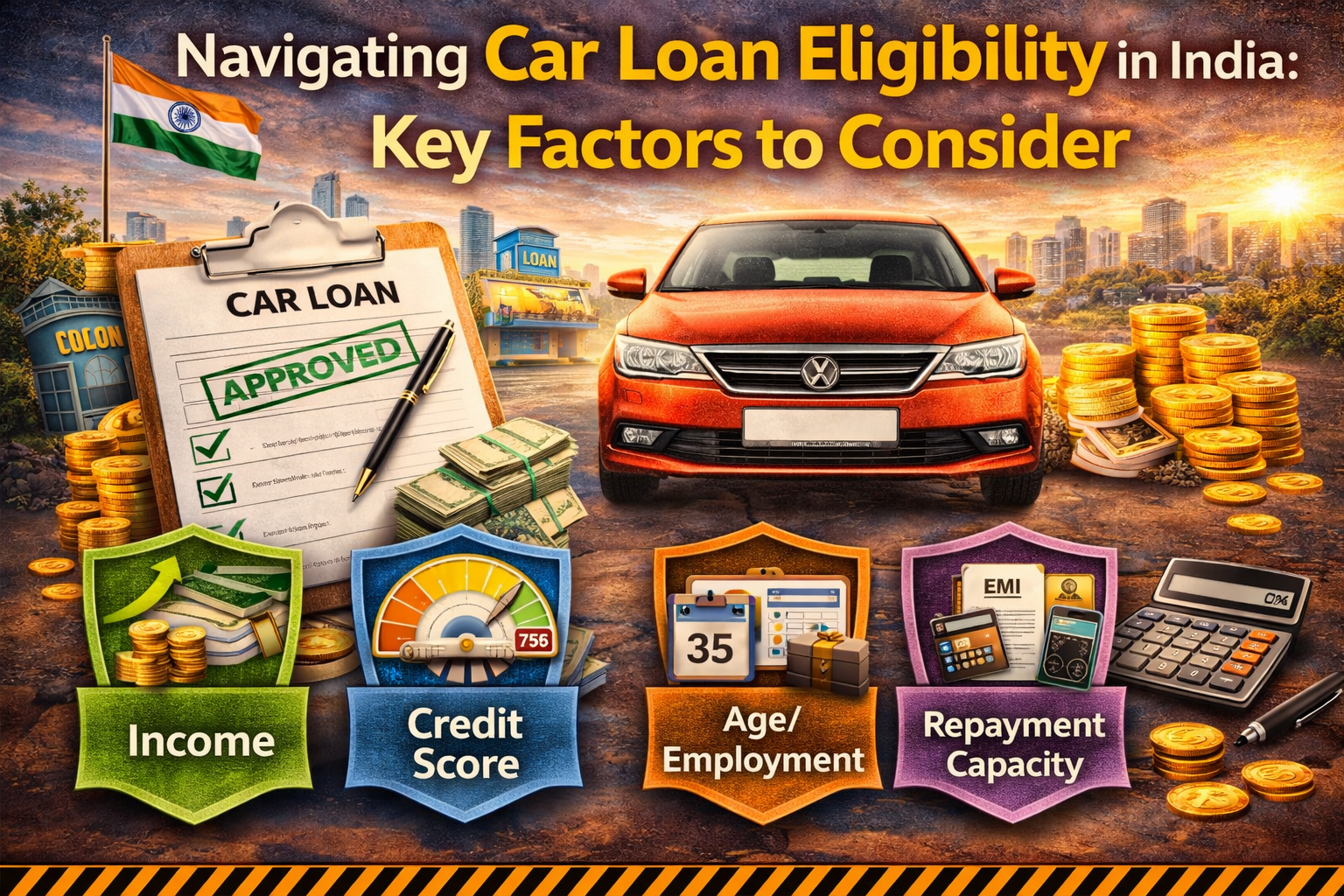
Navigating Car Loan Eligibility in India: Key Factors to Consider
Securing a car loan in India requires a clear understanding of eligibility criteria set by banks and financial institutions. Knowing what factors influence your loan application can enhance your chances of approval and ensure you get the best possible deal. Here are the key considerations to keep in mind:
1. Income Stability
Your monthly income plays a crucial role in determining your loan eligibility. Banks typically require a stable income source to ensure that you can manage loan repayments comfortably:
- Salaried Individuals: Proof of regular salary with the last three months' salary slips.
- Self-Employed Individuals: Profit and Loss statements and Income Tax Returns for the last two financial years.
2. Credit Score
A good credit score is essential for approving your car loan application. Most banks require a score above 700:
- Check your credit report regularly and rectify any discrepancies.
- Maintain a healthy credit utilization ratio to improve your score.
3. Age and Employment Status
Your age and employment status are also considered:
- Applicants are generally required to be between 21 to 65 years of age.
- Stable employment for a minimum of three years is preferred.
4. Loan Amount and Down Payment
The amount of financing you seek and your ability to make a down payment are critical:
- Most banks require a down payment ranging between 10% to 30% of the car's total price.
- Consider your budget when calculating the loan amount to avoid future repayment issues.
5. Existing Liabilities
Having other loans or financial commitments can impact your car loan eligibility:
- Banks consider your Debt-to-Income ratio; ideally, it should not exceed 40%.
- Clear outstanding loans before applying for a new car loan if possible.
6. Type of Car
The type of car you wish to purchase also affects eligibility:
- New cars generally have better financing options compared to used or older models.
- Luxury vehicles may require a higher down payment and stricter eligibility criteria.
7. Documentation
Proper documentation is vital for a smooth application process:
- Prepare ID proof, address proof, income proof, bank statements, and photographs.
- Ensure all documents are correct and submitted in a timely manner.
Conclusion
Understanding these factors can significantly enhance your chances of securing a car loan in India. Evaluate your finances, improve your credit score, and maintain organized documentation. By doing so, you’ll not only increase your likelihood of approval but potentially secure a loan with better terms. Happy driving!
Work Out Your EMI Before You Commit
We arrange used-car finance with partner banks and NBFCs. Know your eligibility and monthly outgo before you choose the car.
Related Articles

Free Used Car Inspection in Ranchi: The 200+ Checks We Run Before We Will Put Our Name on a Car
We inspect every used car across 200+ checkpoints before it goes on our floor, and we will run the same inspection free on a car you are buying from someone else. Here is what we check, the five things that make us reject a car outright, and how to use the report.

What Actually Happens During a Poddar Motors PDI (And Why 20 Minutes at the Dealership Is Not Enough)
A pre-delivery inspection is your last chance to reject a car before it becomes your problem. Here is exactly what our technicians check across 150, 250 and 350+ checkpoint inspections — the paint gauge, the OBD scan, the engine sound analysis — and what we have caught doing it.

Used Car Insurance Transfer in Jharkhand: The 14-Day Rule and Every Step Explained
Most used car buyers focus on the RC transfer and forget about insurance. That mistake can cost lakhs in a denied claim. Here's exactly how to transfer your used car insurance, what NCB you actually get, and the add-ons worth paying for.