Essential Tips for Budgeting Your Next Car in Indian
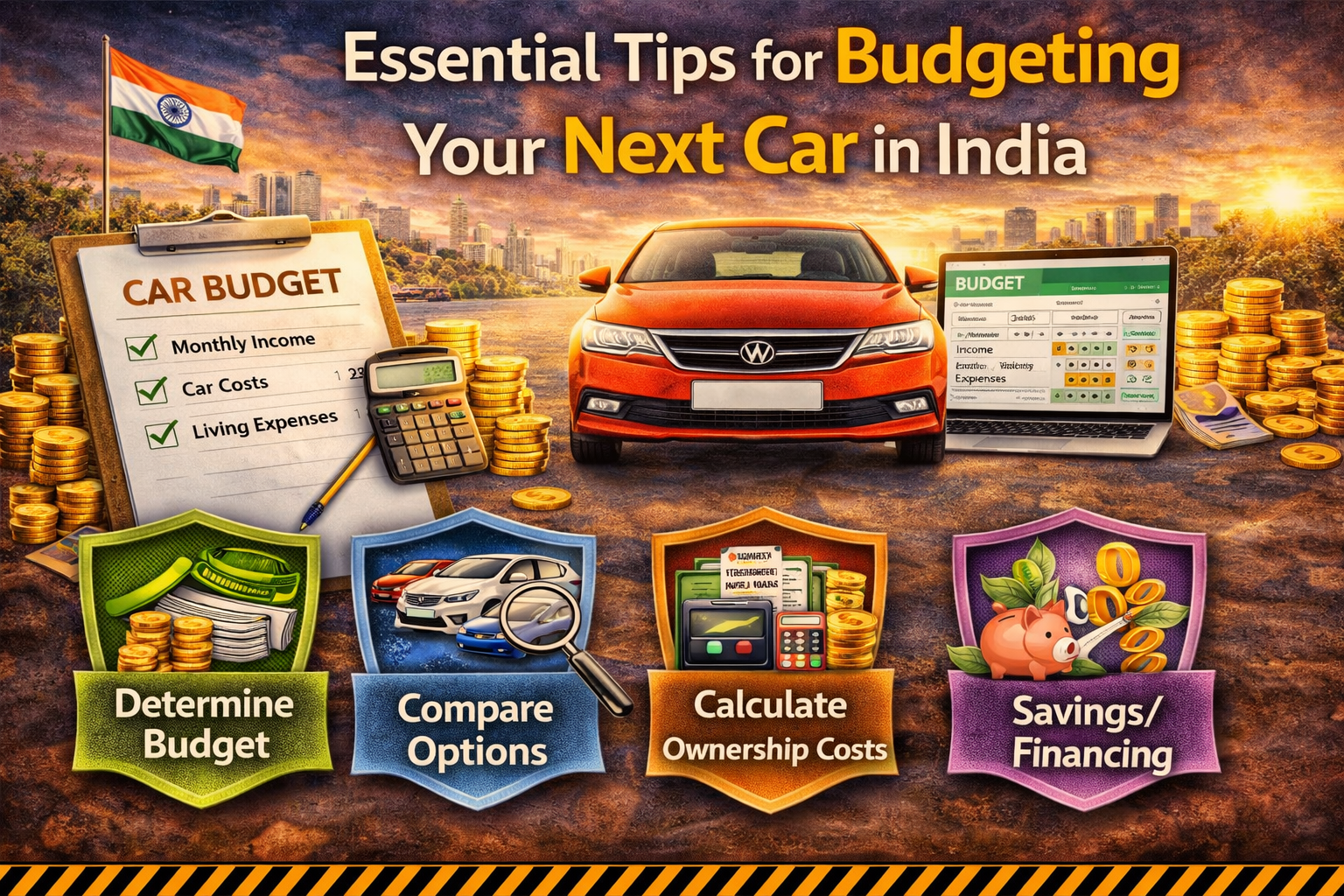
Essential Tips for Budgeting Your Next Car in India
Buying a car is a significant financial decision, especially in a diverse market like India. With various options ranging from budget-friendly hatchbacks to premium SUVs, it’s crucial to assess your finances carefully to make an informed choice. Here are some essential tips for budgeting your next car.
1. Determine Your Budget
Before you begin your car search, establish a clear budget. Factor in not just the purchase price but also other costs associated with ownership.
- On-Road Price: This includes registration, insurance, and road tax, which can add up significantly.
- Monthly Instalments: If you plan to finance your car, calculate EMI based on loan terms, interest rate, and down payment.
2. Assess Your Needs
Consider the following to determine which vehicle fits your lifestyle and needs:
- Daily Commute: Evaluate the distance you travel daily and choose a fuel-efficient model.
- Family Size: A larger family may require a spacious sedan or SUV.
3. Calculate Maintenance Costs
Different cars have varying maintenance costs. Research the average service costs, parts availability, and dependability of the car model you are interested in. Japanese brands generally offer good reliability and lower maintenance, while others may be pricier to maintain.
4. Factor in Insurance Expenses
Insurance is mandatory in India and can vary greatly based on the car’s model and age. Consider:
- Selecting a third-party insurance plan for budget cars and comprehensive coverage for more expensive vehicles.
- Utilizing no-claim bonuses if you have a clean record.
5. Factor in Fuel Costs
Fuel efficiency is a crucial element in budgeting. With petrol and diesel prices fluctuating, pick a model that balances performance and economy. Additionally, assess your driving habits and the type of fuel you plan to use.
6. Evaluate Resale Value
Some brands depreciate faster than others. Research the projected resale value of the car you are interested in to mitigate long-term losses.
7. Plan for Additional Costs
Budget for road trips, tolls, and unexpected repairs. Maintaining a separate fund for emergency repairs ensures you are prepared without straining your finances.
8. Compare Financing Options
Shop around for financing deals from banks and financial institutions. Look for the best interest rates, loan terms, and down payment requirements. Some dealers also offer attractive financing options, so compare thoroughly.
Conclusion
Budgeting for your next car in India may seem daunting, but with careful planning, it can be straightforward. Assess your financial situation, understand the costs involved, and choose a vehicle that meets your needs without breaking the bank. Happy car hunting!
Work Out Your EMI Before You Commit
We arrange used-car finance with partner banks and NBFCs. Know your eligibility and monthly outgo before you choose the car.
Related Articles

Free Used Car Inspection in Ranchi: The 200+ Checks We Run Before We Will Put Our Name on a Car
We inspect every used car across 200+ checkpoints before it goes on our floor, and we will run the same inspection free on a car you are buying from someone else. Here is what we check, the five things that make us reject a car outright, and how to use the report.
What Actually Happens During a Poddar Motors PDI (And Why 20 Minutes at the Dealership Is Not Enough)
A pre-delivery inspection is your last chance to reject a car before it becomes your problem. Here is exactly what our technicians check across 150, 250 and 350+ checkpoint inspections — the paint gauge, the OBD scan, the engine sound analysis — and what we have caught doing it.

Used Car Insurance Transfer in Jharkhand: The 14-Day Rule and Every Step Explained
Most used car buyers focus on the RC transfer and forget about insurance. That mistake can cost lakhs in a denied claim. Here's exactly how to transfer your used car insurance, what NCB you actually get, and the add-ons worth paying for.