Common Mistakes People Make While Buying Used Cars
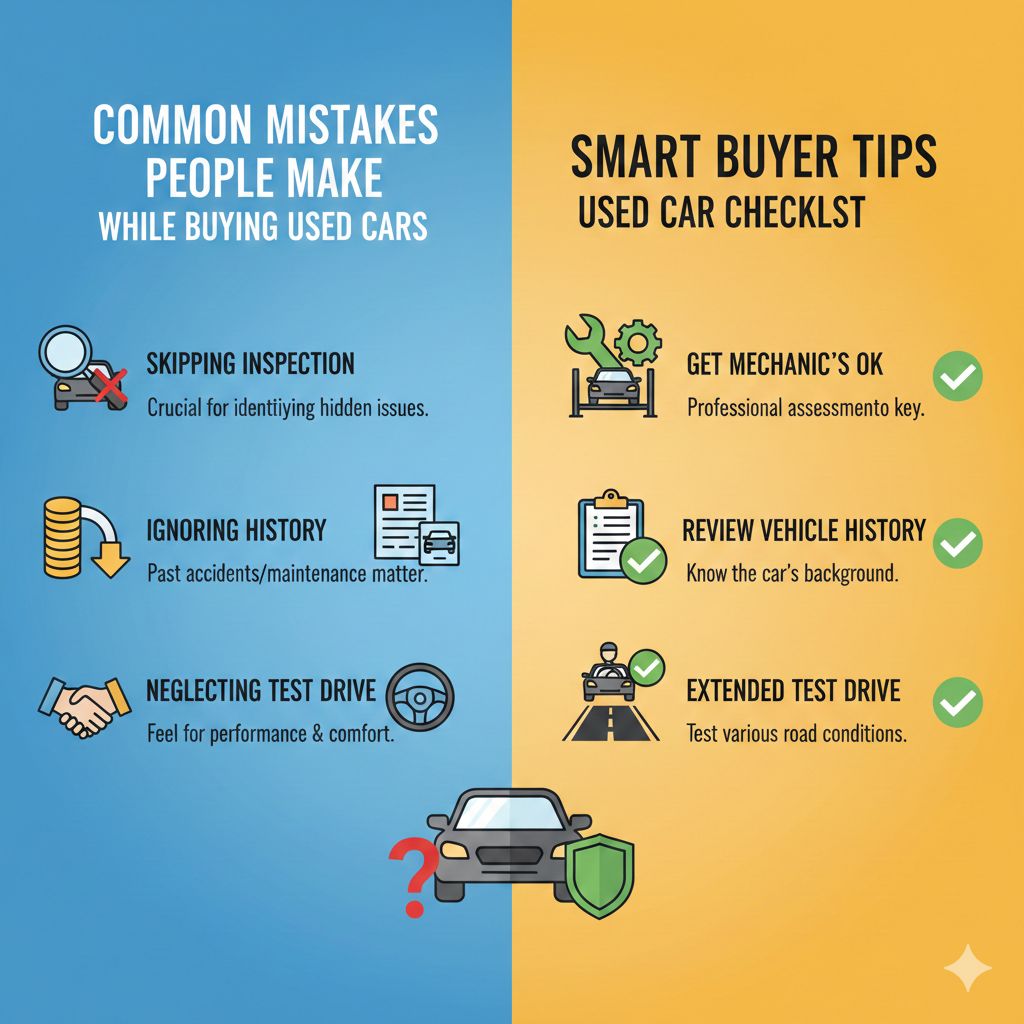
Common Mistakes People Make While Buying Used Cars
Buying a used car can be a smart financial move—but only if you avoid some very common pitfalls. Many buyers end up spending more than expected or facing costly repairs simply because they overlooked a few key details. Let’s walk through the most common mistakes people make when buying a used car, and how you can avoid them.
1. Skipping Research on the Car Model
One of the biggest mistakes buyers make is falling in love with a car without researching it first. Not all models age well. Some have known issues with engines, transmissions, or electronics.
What to do instead:
Research reliability ratings, common problems, maintenance costs, and recall history for the specific model and year you’re considering.
2. Ignoring the Vehicle History Report
Many buyers trust the seller’s word and skip checking the car’s history. This can hide serious issues like accidents, flood damage, or odometer fraud.
What to do instead:
Always request a vehicle history report. It provides crucial details about ownership, accidents, service records, and title status.
3. Focusing Only on the Price
A low price can be tempting, but it’s not always a bargain. Some used cars are cheap because they require expensive repairs.
What to do instead:
Look at the total cost of ownership, including insurance, maintenance, fuel efficiency, and potential repairs.
4. Skipping a Professional Inspection
Many people rely on a quick visual check or a short test drive. Unfortunately, serious mechanical issues aren’t always obvious.
What to do instead:
Have the car inspected by a trusted mechanic before finalizing the purchase. The small inspection fee can save you thousands later.
5. Not Taking a Proper Test Drive
A short drive around the block isn’t enough to evaluate a car properly.
What to do instead:
Test the car on different road conditions. Pay attention to unusual noises, vibrations, braking response, and steering alignment.
6. Forgetting to Check Documentation
Missing or incorrect paperwork can lead to legal and financial trouble later.
What to do instead:
Verify registration documents, insurance details, emission certificates, and ensure the VIN matches across all paperwork.
7. Letting Emotions Take Over
Excitement often leads buyers to rush decisions, ignore red flags, or overpay.
What to do instead:
Stay patient and objective. If something feels off, walk away—there are always more cars available.
8. Not Negotiating the Price
Many buyers assume used car prices are fixed, leaving money on the table.
What to do instead:
Use inspection results and market research to negotiate confidently and fairly.
Final Thoughts
Buying a used car doesn’t have to be risky. By avoiding these common mistakes and taking a careful, informed approach, you can find a reliable vehicle that fits your budget and gives you peace of mind.
A little preparation today can save you from major headaches tomorrow.
Get the Car Inspected Before You Pay
A used car hides its history well. Our inspection covers engine, structure, electricals and paperwork — and you get the report in writing.
Related Articles
Free Used Car Inspection in Ranchi: The 200+ Checks We Run Before We Will Put Our Name on a Car
We inspect every used car across 200+ checkpoints before it goes on our floor, and we will run the same inspection free on a car you are buying from someone else. Here is what we check, the five things that make us reject a car outright, and how to use the report.
What Actually Happens During a Poddar Motors PDI (And Why 20 Minutes at the Dealership Is Not Enough)
A pre-delivery inspection is your last chance to reject a car before it becomes your problem. Here is exactly what our technicians check across 150, 250 and 350+ checkpoint inspections — the paint gauge, the OBD scan, the engine sound analysis — and what we have caught doing it.

Used Car Insurance Transfer in Jharkhand: The 14-Day Rule and Every Step Explained
Most used car buyers focus on the RC transfer and forget about insurance. That mistake can cost lakhs in a denied claim. Here's exactly how to transfer your used car insurance, what NCB you actually get, and the add-ons worth paying for.